
Exhibition I — Now on View
A Journey Through Valhalla
From the golden doors of Odin's hall to the nightly feast of the Einherjar and the long rehearsal for Ragnarök.
PLATE I
SCROLL / PINCH TO ZOOM
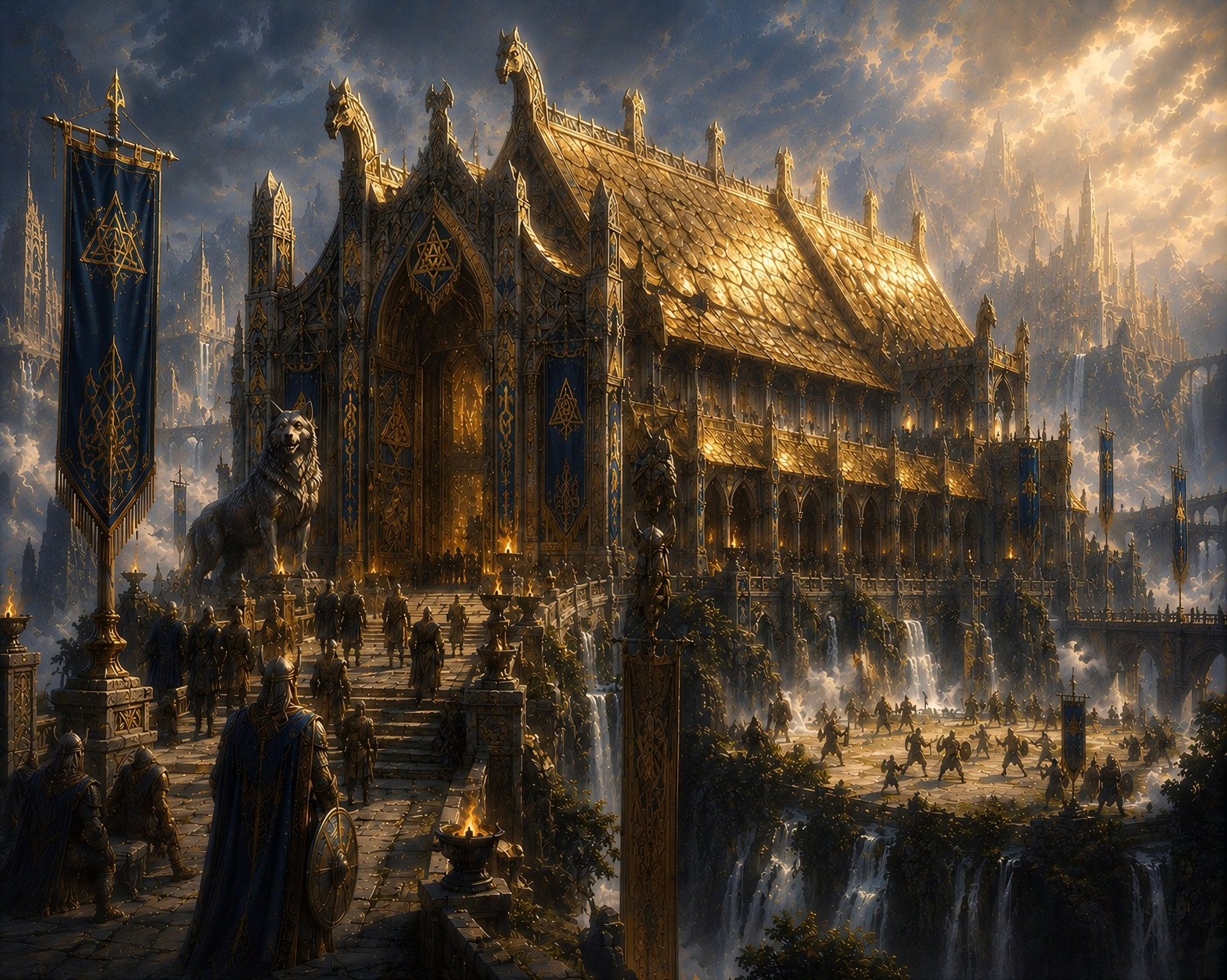
Odin's Hall
In Norse mythology, those chosen by the Valkyries were carried from the battlefield to Odin's great hall in Asgard, where they joined the einherjar—warriors destined to fight once more at Ragnarök.
The old descriptions of Valhalla are wonderfully strange and specific: a roof thatched with golden shields, rafters made from spears, benches strewn with armor, and 540 enormous doors through which the warriors will eventually march.
And Valhalla was no place of eternal rest.
Each day, the einherjar armed themselves and fought one another in preparation for the final battle. Each evening, their wounds were healed, and they returned to Odin's hall to feast and drink until morning.
A warrior's paradise.
A Walk Through Odin's Hall
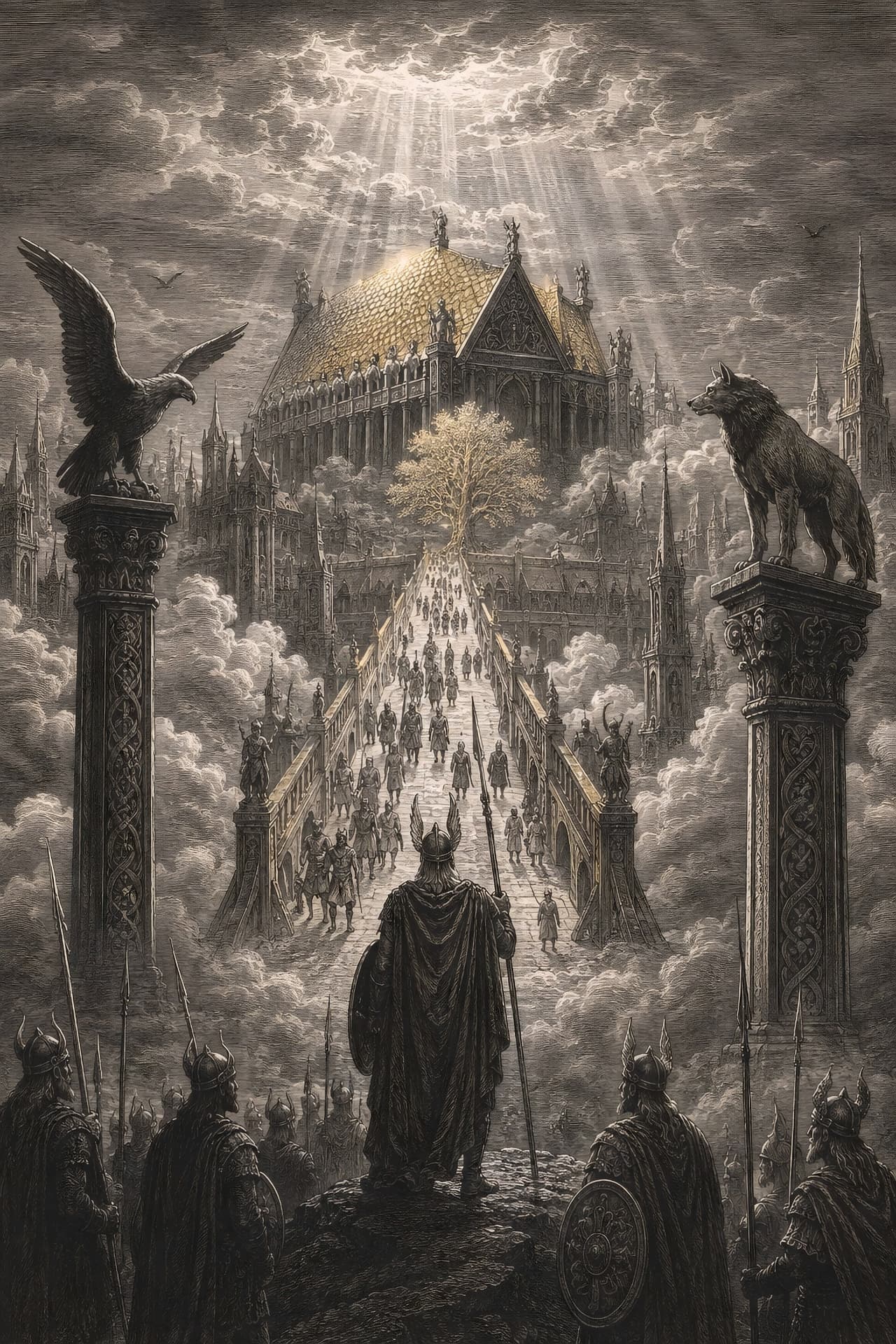
Valhalla Through Doré
Gustave Doré never illustrated Valhalla.
But his engravings seem almost made for it.
Doré filled his imagined worlds with impossible heights, vast architecture, turbulent skies, and tiny human figures standing before something far greater than themselves. His illustrations of The Divine Comedy, the Bible, and other great works transformed the supernatural into places that felt immense enough to enter.
Plate II asks what might happen if that visual language were turned toward Odin's hall.
Here, Valhalla rises above the clouds like a northern cathedral. Warriors approach beneath an enormous sky, while the hall itself glows in the distance—less a building than a destination at the edge of the mortal world.
It is not an image Doré ever made.
It is an attempt to imagine how Valhalla might feel through the visual language he left behind.
An old myth, seen through another age's imagination.
Plate II
Choosers of the Slain
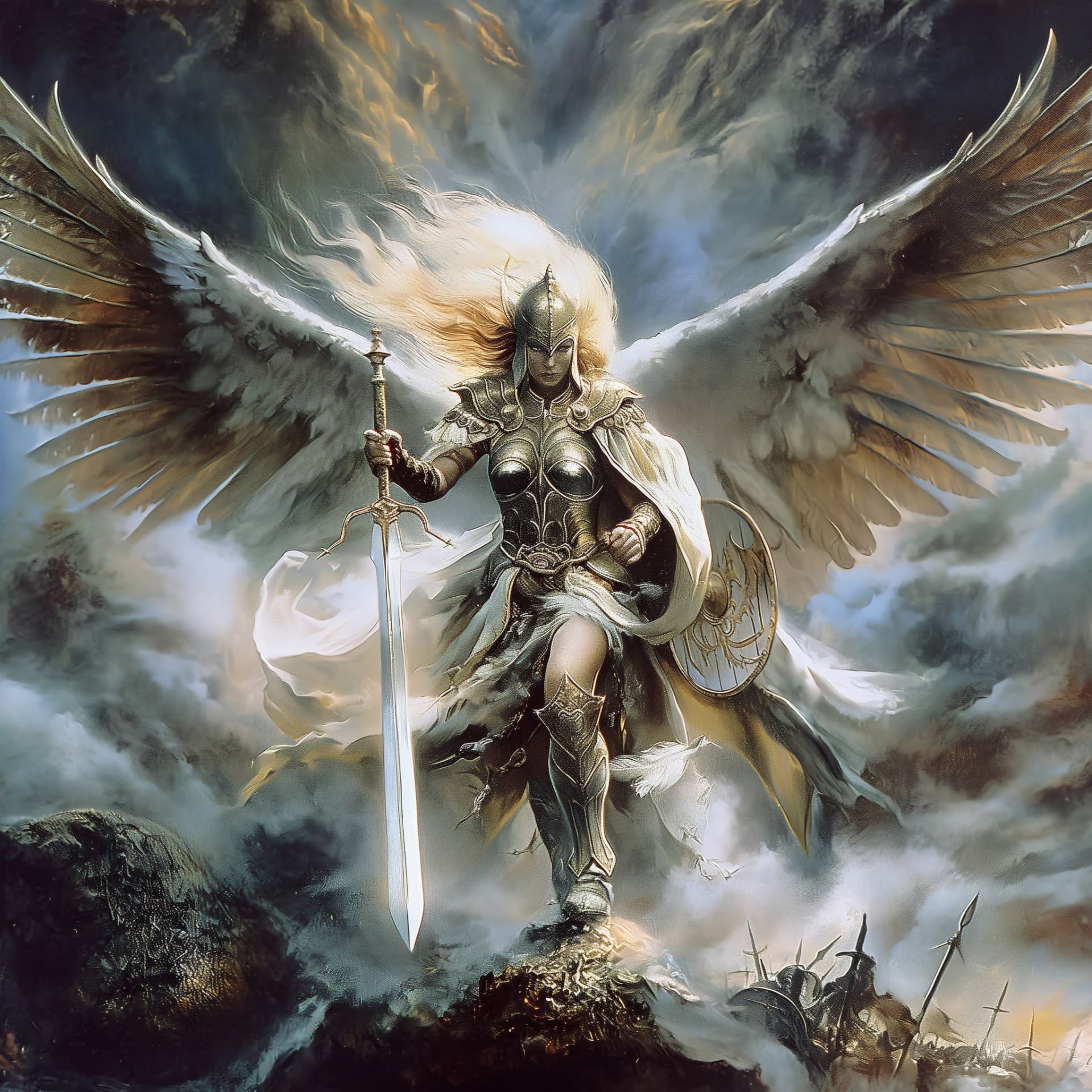
The Valkyries were among the most mysterious figures of the Norse world.
Their name comes from the Old Norse valkyrja—“chooser of the slain.” They rode to the battlefield in service of Odin, deciding which fallen warriors would be taken from the world of the living.
Those chosen were carried to Valhalla, where they joined the einherjar and prepared for the final battle of Ragnarök.
But the Valkyries were more than messengers of death. In the old poems, they could appear as supernatural warriors, attendants in Odin’s hall, and powerful women whose lives sometimes became entangled with those of mortal heroes.
Beautiful and terrible, they stood at the threshold between battle and the world beyond.
Where the Valkyrie rode, fate followed.
Plate III
Until Ragnarök
For the einherjar, death was not the end of battle.
Each morning, the warriors of Valhalla armed themselves and went out to fight. They struck one another down as they had in life, practicing for the greater battle still to come.
But when evening arrived, the fallen rose again.
Wounds were healed. Weapons were set aside. The warriors returned to Odin's hall, where food and drink awaited them and the company of the slain gathered once more around the tables.
Tomorrow, they would fight again.
And so the days continued—battle and feast, death and renewal—while beyond the walls of Valhalla, the world moved slowly toward Ragnarök.
The hall is full, the cups are raised, and the final battle has not yet come.